Power, and Interests of the British Establishment
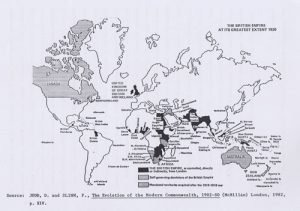
As the technological developments brought a speedy method of production, which was beyond the capacity of the home market to buy all the produced goods or fully supply the need for raw materials to make the goods, Britain was forced to seek markets and raw materials overseas. To do this the elite had to implement a strategy which would ensure that markets would be developed and the flow of raw materials would be assured. Therefore, Britain had to resort to the policy of direct control over those far away land which were considered as the potential markets and places which possessed the raw materials that were important to Britain’s manufacturing industry.
The strategists were members of the elite which benefited from these economic and subsequently political developments. They were people who had controlling interests in manufacturing industry and the financial operations of the City of London; they included the landed class, and together have come to be known as “the establishment”9 This direct control of foreign lands which later led them to become acquisitions of Britain brought extra gains for the establishment. New professional opportunities arose: positions in those organisations which were created in order to look after the possessions abroad i.e. Colonial Office, and the department responsible for defence; in addition, all those state departments which already were in existence grew larger to enable themselves to cope with the extra activities created as a result of this economic and political growth.
Those members of the establishment who had leading positions in the state departments were the political elite. As well as jobs which were direct gains from the territorial possessions, or the empire, which Britain acquires, the British political elite’s main concern was the economic well-being and privileges of the whole of the establishment (or the imperial based class). This is due to the fact that the establishment, as we have seen in here, comprises of those with a similar background and often this social cohesion develops into kinship. Therefore it was the economic and social interest of the establishment that the political elite had to protect.
-
- 9.ibid.
[/vc_column_text][/vc_column][/vc_row]