
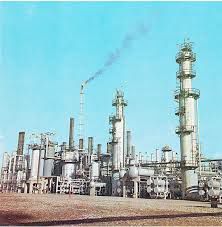
In 1954, a year after the Iranian Prime Minister, Dr. Musaddiq, was overthrown, Sir Roger Makins, the British Ambassador to Washington, wrote: The Americans are out to take our place in the Middle East. Their influence has greatly expanded there since the end of the Second World War, and they are now firmly established as paramount foreign influence in Saudi Arabia. They are gaining ascendancy in Persia.¹ Britain's economic weakness, which prevented her from keeping up with military, and especially atomic weapons technology, and fear of the communist threat to her interests in the Persian Gulf, persuaded the British...
Read More

THE ANGLO-IRANIAN OIL COMPANY. A FORERUNNER TO BRITISH PETROLEUM COMPANY LIMITED. (BP.)
In 1954, a year after the Iranian Prime Minister, Dr. Musaddiq, was overthrown, Sir Roger Makins, the British Ambassador to Washington, wrote: Iranian Government to exploit oil. After protracted negotiations the contract included the following provisions: (a)The exclusive right for 63 years to exploit petroleum throughout the Persian Empire, with the exception of five provinces in north Persia. (b)On the date of the formation of the first exploitation company the Persian Government was to receive £20,000 in cash, £20,000 in paid up shares and 'annually a sum equal to sixteen per cent' of the Company's profits. (c)On expiration of...
Read More
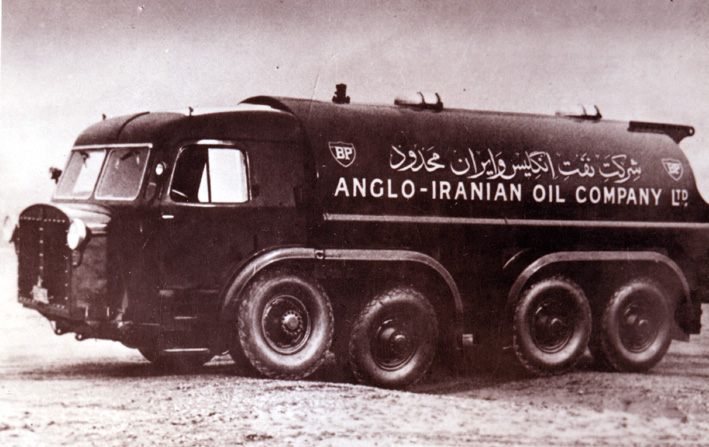
IRAN, AND THE ROOT OF THE ANGLO-IRANIAN OIL COMPANY’S DISPUTE. CHALLENGING THE UNITED KINGDOM’S WORLD AUTHORITY. A TURNING POINT. 1945-1951
Post-war oil production in Iran had been moving up, from 19.2 million tons in 1945 to nearly 20.2 million in 1946 and on its way toward 24.9 million in 1947, but there was as yet no certainty that this trend would continue. Meanwhile, AIOC was hesitant about how far it could safely go to improve the level of payment to Iran.¹ Real negotiations did not get underway until the autumn of 1948. They were then wide-ranging, with complaints on the Iranian side against almost every aspect of the Company's commercial and employment policies. The Iranian economy was under considerable...
Read More

The British Labour Party Uses Humanitarian Assistance as a Means of International Diplomacy In the Twenty-First Century
Introduction In 1945 the Labour Government, led by Clement Attlee, inherited a huge and complex Empire. It appeared the British Empire had yet again emerged intact from a fundamental challenge, but in real terms, this was not the case. The global war's impact on Britain was a massive debt that was mainly owed to the United States. Additionally, estimates have shown that 10% of Britain's pre-war wealth or no less than one-quarter of disinvestment had been lost. Most importantly, Britain was able to pay for only a fraction of the imports she needed for current survival and for the reconstruction...
Read More

Pax Britannica – The Zenith of the British Empire
To protect their power and interest, the British elite needed to extend their influence beyond the boundaries of the United Kingdom. This, in previous centuries and to some degree in the present time, has led them to direct domination of foreign lands. In this article an illustration will be given of how the political elite has sought to secure British power and interests in the countries that she directly or indirectly ruled. The Theory of State Expansionism The tendency to expand, or the principle of growth, may characterize all social organism. This may also be put as the propensity of...
Read More