
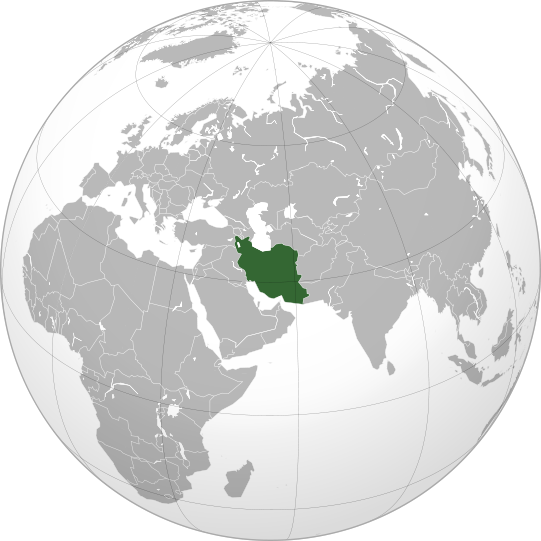
Traditionally the Americans have always been of the opinion that cultivating closer economic and political ties with Iran, the most powerful state in the Persian Gulf, with its huge population, and industrialization program would serve Western interests better. Increasingly, Iran began to play an important part in the United States' strategic thinking, for the protection of the Persian Gulf oil supplies and accessibility to the oil without disruption for producing it. This was, in the face of Soviet threat, and the spread of communism to the Persian Gulf, a view which was shared by other Western Allies, such as the...
Read More

The British Conservative Party, Iran, and the Persian Gulf: A New Era?
The British Conservative Party "proclaims the necessity for capital-labour co-operation, and a 'property-owning democracy'. It proclaims the need for free competition in industry, and the end of restrictive practices both between employers, and among employees. It is the party of social mobility. 'Quality, and not equality' and 'opportunity rather than security', are two of its slogans."1 The British Conservative Party's Policies are, on the whole, hard to characterize. "At some periods ideas such as individual freedom will be clearly articulated, and may even produce concrete policy proposals designed to promote such values."2 At some other periods, it may "seem to...
Read More

IRAN, A GLOBAL GEOPOLITICAL, AND STRATEGIC FOCAL POINT, AND HUB THROUGHOUT THE HISTORY AND BEYOND: A CASE OF THE BRITISH INDIAN EMPIRE, AND THE UNITED KINGDOM’S FOSSIL ENERGY NEEDS IN THE 19TH AND 20TH CENTURIES. (IRAN, THE PERSIAN GULF & A.P.O.C.)
With the consolidation of the British position in India, the commercial hegemony of the East India Company over the Persian Gulf zone underwent a gradual change into political supremacy over the region, which lasted until nearly three quarters of the twentieth century. The initial factor was Napoleonic activity in the Middle East. France, traditionally Britain's colonial rival, had already made an abortive attempt in the mid seventeenth century to establish herself in the Persian Gulf area, with a view to capturing India. Later when hostility broke out between Britain and revolutionary France, the Paris government sent emissaries to the Middle...
Read More
NOT A QUESTION OF IMPERIAL FLAG WAVING, BUT A MATTER OF THE UNITED KINGDOM’S ECONOMIC SURVIVAL: THE BRITISH LABOUR GOVERNMENT IN DISARRAY OVER THE OIL CRISIS IN IRAN: IDEOLOGY V. REALITY: 1948-1951.
This was the first of the recurring post War oil crises. From the very beginning of this important crisis the British foreign Secretary, Bevin, was highly concerned about the role that America might play in unfolding diplomatic or military situation. In 1950 the Labour Government first addressed itself to the Anglo-Iranian Oil Company's Crisis. The British Foreign Secretary, Ernest Bevin, was thinking about how best the Americans could be used in the crisis. It was important for the efforts of the British to work with the Americans. not to get wires crossed, and not let Iran play the one...
Read More
Power, and Interests of the British Establishment
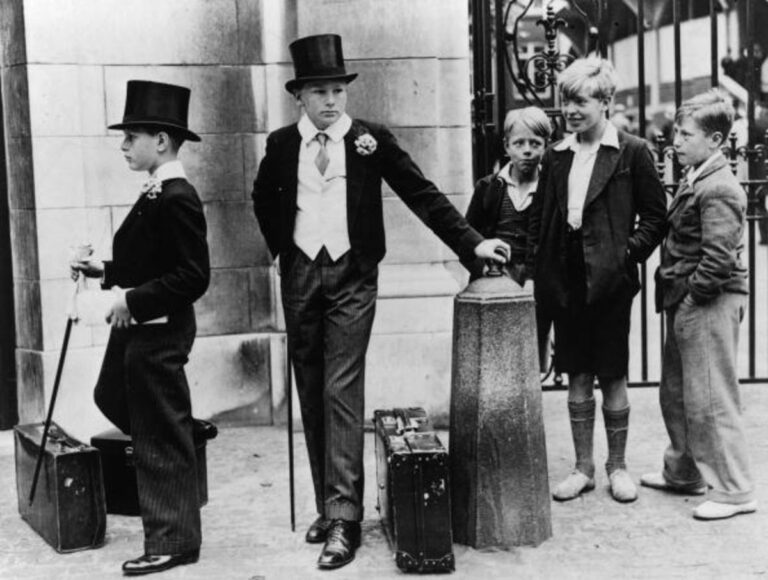
The necessary, if not sufficient, basis of the power of the dominant, elite group or the 'establishment' is the strategic control of the enterprises which form the oligopoly sector of the British economy. This sector of 'big business' consists of the one thousand largest firms in the economy, these firms dominating the various markets in which they operate. The structural basis of the petit bourgeoisies, is distinct from but dependent on this big business sector. The sector of small and medium sized firms is based, in part, on the conditions of competitive capitalism. But the basic constraints upon the business...
Read More